
 Welcome to the blog that will guide you through the fascinating and often misunderstood world of cryptocurrencies! In recent years, digital currencies such as Bitcoin and Ethereum have become one of the hottest topics in finance, technology, and everyday life. For some, they are the investment opportunity of the century, for others, a revolution that will change the way we think about money and transactions.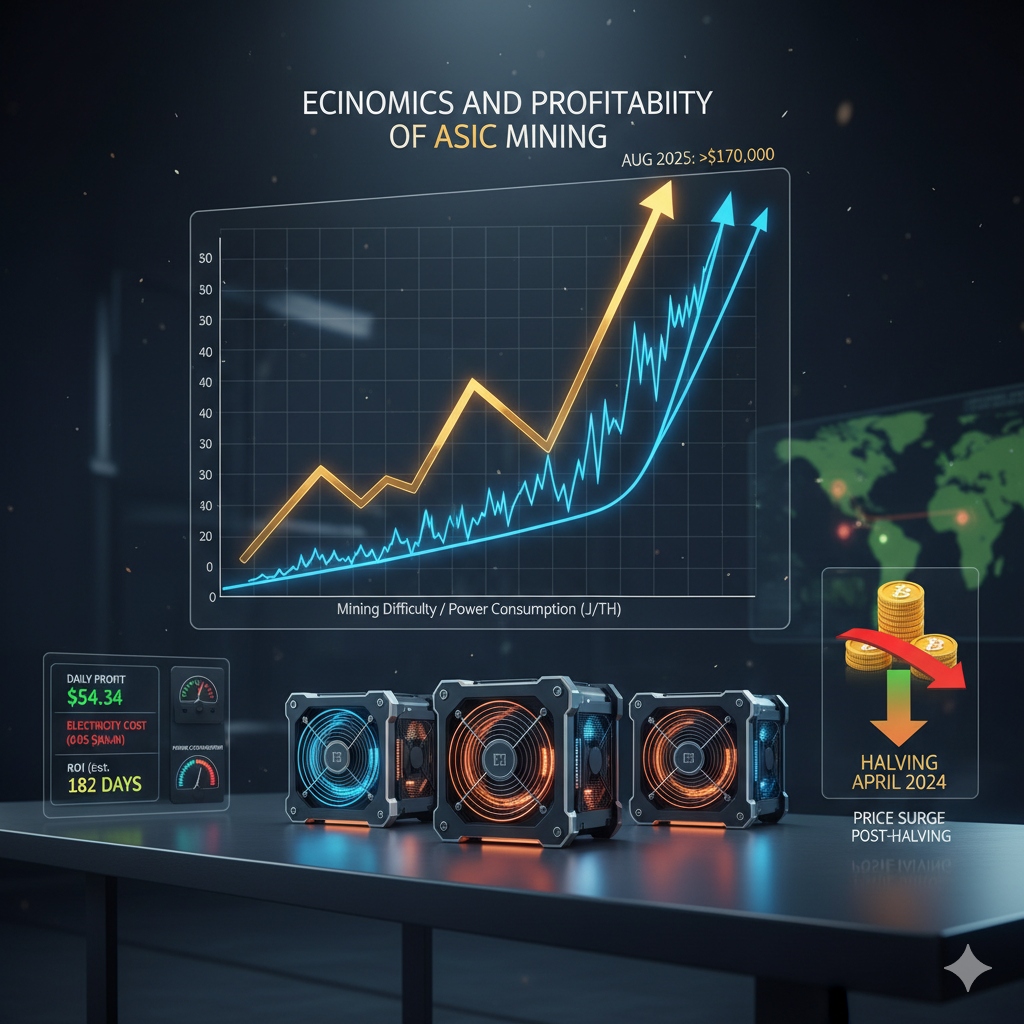
The Profitability of Mining Using an ASIC Miner: A Strategic Due Diligence Report
I. Executive Summary: The Profitability Imperative in the Post-Halving Era
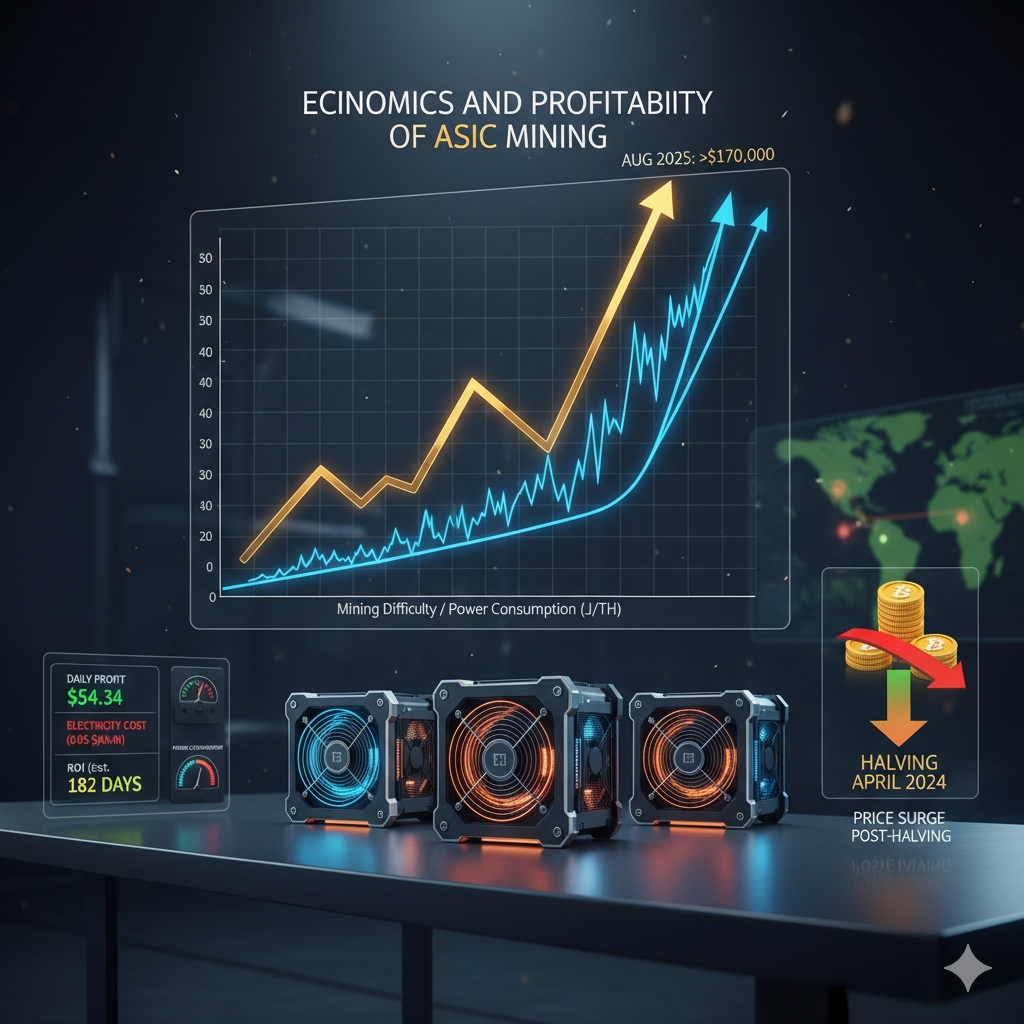 This report provides a detailed, multi-dimensional analysis of the factors that determine the profitability of cryptocurrency mining using Application-Specific Integrated Circuit (ASIC) hardware. It goes beyond a simple calculation of revenue versus cost to explore the complex interplay of technical efficiency, volatile market dynamics, operational risks, and the evolving regulatory landscape, with a particular focus on the environment following the April 2024 Bitcoin halving event. The analysis concludes that sustained profitability in ASIC mining is not a passive income stream. Instead, it is a high-stakes industrial operation defined by a ruthless pursuit of efficiency. Success requires a significant capital outlay, meticulous operational management, and a forward-looking strategy that accounts for market volatility, rapid hardware obsolescence, and a constant need for efficiency gains.
Key findings of this report include:
- Profitability is a function of a complex Total Cost of Ownership (TCO) model, where a high initial investment in efficient hardware is made to secure a lower, more stable, and competitive operational cost base.
- Bitcoin's halving events act as a Darwinian filter, forcing miners to adopt the latest, most energy-efficient hardware and to optimize operational costs, especially electricity.
- The strategic choice between ASICs and alternative hardware, such as GPUs and FPGAs, is a fundamental trade-off between the high specialization and efficiency of ASICs and the greater versatility and flexibility of GPUs.
- The mining ecosystem operates as a self-perpetuating cycle of competition, where the deployment of more powerful hardware drives up the network's hashrate and difficulty, thereby constantly eroding the profitability of older equipment.
II. The Foundation: Understanding ASIC Mining and Its Evolution
Introduction to ASIC Technology
An Application-Specific Integrated Circuit (ASIC) miner is a specialized piece of hardware purpose-built for performing a single task or a few specific tasks with maximum efficiency. In the context of cryptocurrency, these devices are custom-designed to solve the cryptographic puzzles that secure Proof-of-Work (PoW) blockchains like Bitcoin. Unlike general-purpose integrated circuits like CPUs or GPUs, which are designed to perform a broad range of tasks, ASICs are optimized exclusively for generating hashes. This narrow specialization is the source of their tremendous speed and superior energy efficiency, enabling them to operate at a scale measured in terahashes per second (TH/s) while consuming less power per hash compared to other hardware.
The Evolution of Mining Hardware
The current dominance of ASICs is the result of a significant economic and technological evolution within the mining industry. In the early days of Bitcoin, when the network was small and its value was low, mining was accessible to anyone with a standard CPU.10 As the cryptocurrency gained popularity, miners began to use Graphics Processing Units (GPUs), which offered a significant leap in computational power due to their thousands of parallel cores. This era, however, was short-lived.
The transition from general-purpose hardware to ASICs was not merely an innovation but a necessary adaptation driven by fundamental market forces. As the success of Bitcoin attracted more participants, the total computational power, or hashrate, of the network began to increase exponentially.6 To maintain a stable block discovery time of approximately 10 minutes, the Bitcoin protocol is designed to automatically adjust its mining difficulty every 2,016 blocks, or roughly every two weeks. As the total hashrate grew, the network's difficulty rose in a direct response, ensuring that blocks were not found too quickly.
This process created an economic problem for miners: as network difficulty increased, the share of the block reward earned by each individual miner with the same amount of hashing power began to decrease. Less efficient hardware, such as CPUs and GPUs, became increasingly unprofitable to operate as their revenue could no longer cover their electricity costs. To remain competitive and profitable, miners were compelled to invest in more specialized and efficient hardware. This created a technological arms race that ultimately led to the development and mass adoption of the ASIC, altering the cryptocurrency mining landscape forever. The market thus drove its own technological evolution, favoring the most efficient solutions and marginalizing less specialized alternatives.
III. The Profitability Equation: Core Factors and Calculations
Revenue Drivers: The Unpredictable Side of the Equation
Mining profitability is a dynamic balance between revenue and costs. On the revenue side, the primary drivers are subject to high volatility and protocol-level changes. The principal source of income for a miner is the block reward, which is the fixed number of new coins created with each new block. This reward is subject to a pre-programmed event known as the
halving, which occurs approximately every four years, or every 210,000 blocks. The most recent halving in April 2024 cut the block reward from 6.25 BTC to 3.125 BTC, posing an immediate and direct challenge to profitability.
The halving is a deliberate, deflationary event designed to control the supply of new Bitcoin and maintain its scarcity.3 However, it poses a significant threat to a miner’s income by instantly cutting their primary revenue stream in half. This economic pressure forces a market consolidation, as only the most efficient and well-capitalized miners can survive the sudden reduction in rewards. This event thus simultaneously threatens miners' existence and drives the industry toward greater efficiency and sustainability, as miners are incentivized to seek out more energy-efficient techniques and lower-cost energy sources to remain profitable.
As block rewards decrease over time with successive halvings, transaction fees become an increasingly important part of a miner’s total income. Finally, the
cryptocurrency's price is a critical, and highly volatile, factor. The value of mined cryptocurrency is directly tied to its market price, which can fluctuate dramatically and quickly turn a profitable operation into a loss-making one. According to research, these price fluctuations can significantly impact the energy consumption and environmental footprint of mining.
The Total Cost of Ownership (TCO) Analysis: The Predictable Side
The true cost of a mining operation is best understood through a Total Cost of Ownership (TCO) analysis, which accounts for both upfront capital expenditures and ongoing operational expenses. The initial capital investment for modern ASICs is substantial, often running into thousands of dollars per unit, in addition to the cost of necessary infrastructure.
However, operational expenses (OpEx) are the true determinant of long-term profitability. The single most critical variable is the cost of electricity. A high residential electricity rate, such as $0.14 per kWh, can render a miner unprofitable, wiping out all potential earnings, while a low commercial rate of $0.047 per kWh can make the same operation highly lucrative. This extreme sensitivity to electricity prices has made securing low-cost power a central strategic objective for large-scale mining operations.
Additionally, ASICs generate immense heat and noise, making home operation impractical and necessitating investments in robust cooling solutions and suitable infrastructure. This includes advanced ventilation or even liquid/hydro cooling systems to maintain a stable operating temperature and maximize hardware efficiency and lifespan. Proper maintenance and uptime are also crucial, as breakdowns reduce the machine's operational hours and directly impact the return on investment.18 Proactive monitoring systems are essential for identifying issues and maximizing efficiency.
The high initial investment in an ASIC is a strategic decision to secure a lower, more stable, and more competitive operational cost base over the hardware's lifespan. For example, a modern ASIC like the Antminer S21 XP has an energy efficiency of 13.5 J/TH.4 In contrast, a less efficient GPU rig may consume 1,000–2,000 W for a much lower hashrate than an ASIC that draws 800–1,200 W.4 The less efficient miner is far more sensitive to electricity price fluctuations, and its primary ongoing cost is a much higher burden. The high capital expenditure on an ASIC is therefore a strategic trade-off, enabling a miner to sustain a profitable operation even in a competitive environment where less efficient hardware is no longer viable.
IV. The Competitive Landscape: ASIC vs. Alternatives
The choice of mining hardware is not a question of which is "better" but rather a strategic decision aligned with the miner's goals. A comparative analysis of the primary hardware types reveals the distinct trade-offs inherent in each.
Table 1: Comparative Analysis of Mining Hardware (ASICs vs. GPUs vs. FPGAs)
|
Feature |
ASIC Miners |
GPU Miners |
FPGA Miners |
|
Primary Use |
Purpose-built for single-algorithm mining (e.g., Bitcoin, Litecoin) |
Designed for graphics, but adaptable for various algorithms and tasks |
Reconfigurable circuits for custom-optimized performance |
|
Hashrate |
Massive (TH/s scale) |
Modest (MH/s scale) |
Comparable to ASICs in some cases |
|
Energy Efficiency |
Superior (low J/TH) |
Significantly less efficient |
More efficient than GPUs, but often less than ASICs |
|
Initial Investment |
High upfront cost |
Lower, more widely available |
Expensive and difficult to source |
|
Flexibility |
Limited to one or a few algorithms |
High; can switch between altcoins |
High; can be reprogrammed for different algorithms |
|
Longevity |
Short useful life due to rapid obsolescence |
Longer useful life due to repurposing options (e.g., gaming, AI) |
Reprogrammable, but complex to maintain |
|
Typical User |
Large-scale, professional operations |
Hobbyists, home miners, altcoin enthusiasts |
Niche, advanced miners |
The market has segmented itself based on these strategic choices. For a miner whose goal is to maximize efficiency and hashrate for a major cryptocurrency like Bitcoin, the ASIC path is the only viable option.4 This strategy requires a large upfront capital investment for a highly specialized machine that promises unmatched efficiency and a predictable return on investment, particularly with access to low-cost electricity. The inherent risk lies in the lack of flexibility and rapid obsolescence if a cryptocurrency's algorithm changes.
Conversely, the GPU path is chosen by miners who prioritize versatility and may operate on a smaller scale, perhaps as a hobby. The strategy is to use a cheaper, multi-purpose machine that can switch between different altcoins (e.g., Monero, Ethereum Classic) based on short-term profitability trends. The trade-off is a significantly lower hashrate and energy efficiency, which can make the return on investment slow or non-existent, especially for major coins like Bitcoin, which are no longer profitable to mine with GPUs.
The third option, FPGAs, offers a middle ground, providing better efficiency than GPUs and greater reprogrammability than ASICs. However, their complexity, high cost, and limited availability confine them to a small segment of advanced miners engaged in experimental or niche deployments.
V. Mitigating Risks and Maximizing Strategy
Dynamic Market and Network Variables
A critical risk for ASIC miners is the dynamic nature of the mining ecosystem. Bitcoin's difficulty adjustment mechanism is designed to maintain a stable block time of 10 minutes. As more powerful ASICs are deployed and the total network hashrate rises, the difficulty automatically increases to compensate. This creates a self-perpetuating cycle where miners must continuously invest in newer, more powerful hardware to maintain their share of the block reward and avoid becoming unprofitable.
This competitive cycle leads to a rapid turnover of hardware, a phenomenon known as hardware obsolescence. The profitability of a new ASIC may end in as little as 1–2 years, even if the machine is still physically functional. This poses a significant financial risk and creates a substantial environmental problem of electronic waste.
Strategic Mitigation and Operational Excellence
To mitigate these risks, successful miners employ several strategic measures. The power of mining pools is one such strategy. By joining a pool, individual miners combine their computational power to increase the probability of collectively finding a block and receiving a consistent, albeit smaller, share of the rewards. This stabilizes income and reduces the risk of long periods with no revenue, which is especially important for smaller operations.
Furthermore, sourcing low-cost and renewable energy is no longer just an optimization but a necessity for survival in the post-halving landscape. The industry is seeing a major shift toward renewable energy sources like hydropower, wind, and solar, which addresses both rising operational costs and public demand for sustainability.
To model potential profitability, miners rely on profitability calculators from services like WhatToMine, NiceHash, and CoinWarz. These tools take inputs such as hashrate, power consumption, and electricity costs to provide an estimated profit.
However, these calculators can provide a false sense of certainty. A calculation that is profitable today may be unprofitable tomorrow due to a sudden spike in difficulty or a drop in a cryptocurrency's price. This is because the tools often use the current network difficulty and market price, both of which are highly volatile and constantly changing. A sophisticated miner understands that these calculators are for baseline scenario modeling, not definitive forecasts. A prudent approach involves manually adjusting the variables to stress-test an investment under different future conditions.
Top-Tier ASIC Miner Specifications
Table 2: Representative ASIC Miner Specifications (Circa 2025)
|
Model |
Manufacturer |
Hash Rate (TH/s) |
Power Consumption (W) |
Energy Efficiency (J/TH) |
|
Antminer S21 XP Hyd |
Bitmain |
270 |
3645 |
13.5 |
|
Whatsminer M60 |
MicroBT |
154 |
3422 |
21.8 |
|
Antminer S19 XP Hydro |
Bitmain |
255 |
N/A |
N/A |
|
Antminer S19j Pro |
Bitmain |
104 |
N/A |
N/A |
*Note: Data for select models. Specifications vary by version and manufacturer.
VI. Regulatory and Geopolitical Risks
ASIC mining, particularly at a large scale, faces significant regulatory and geopolitical risks. The high energy consumption, turbine-like noise pollution, and substantial water usage associated with these operations have attracted public scrutiny and led to community complaints.9 Governments are increasingly considering regulation or taxation on the industry in response to these environmental and community concerns. The introduction of "Right-to-Mine" laws at the state level has added a layer of complexity by limiting local control over mining operations.
Furthermore, the concentration of mining operations and instances of foreign ownership raise national security concerns regarding grid stability and the potential for surveillance. These factors represent external risks that can impact the viability and profitability of any mining venture, regardless of its operational efficiency.
VII. Conclusion: A Forward-Looking Outlook
The profitability of ASIC mining is a complex and high-stakes endeavor that is far from a simple "get rich quick" scheme. It is a capital-intensive, high-risk venture where success hinges on optimizing every single variable in the Total Cost of Ownership equation. The post-halving environment has amplified the competitive pressures, making operational excellence and a strategic approach to capital deployment more critical than ever before.
For those with access to low-cost or stranded energy, significant capital, and the expertise to manage a complex industrial operation, the rewards can be substantial. For others, a more viable and less risky strategy may be to simply buy and hold the cryptocurrency outright, thereby avoiding the significant operational complexities and market volatility inherent in mining.
Table 3: Profitability Drivers, Their Impact, and Strategic Responses
|
Factor |
Impact on Profitability |
Optimization Strategies |
|
Electricity Cost |
Major ongoing expense; highly sensitive to price fluctuations |
Locate rigs in regions with cheap energy or utilize renewable sources. |
|
Network Difficulty |
Rising difficulty reduces profitability over time |
Continuously invest in and upgrade to newer, more efficient ASIC hardware. |
|
Hardware Obsolescence |
Older equipment becomes unprofitable to run, creating e-waste and financial risk |
Implement a strategic hardware upgrade cycle.15 Consider resale of older units to regions with lower energy costs. |
|
Cryptocurrency Price |
Directly determines mining revenue; subject to extreme volatility |
Use profitability calculators to model scenarios, but do so with an understanding of market risks.20 Consider hedging with financial instruments. |
|
Cooling & Infrastructure |
Poor cooling reduces hardware lifespan and efficiency; noise makes home operation impractical |
Invest in robust cooling systems like advanced ventilation, hydro, or immersion cooling. |
|
Maintenance |
Breakdowns and downtime reduce uptime and ROI |
Implement proactive monitoring systems and a regular maintenance schedule. |
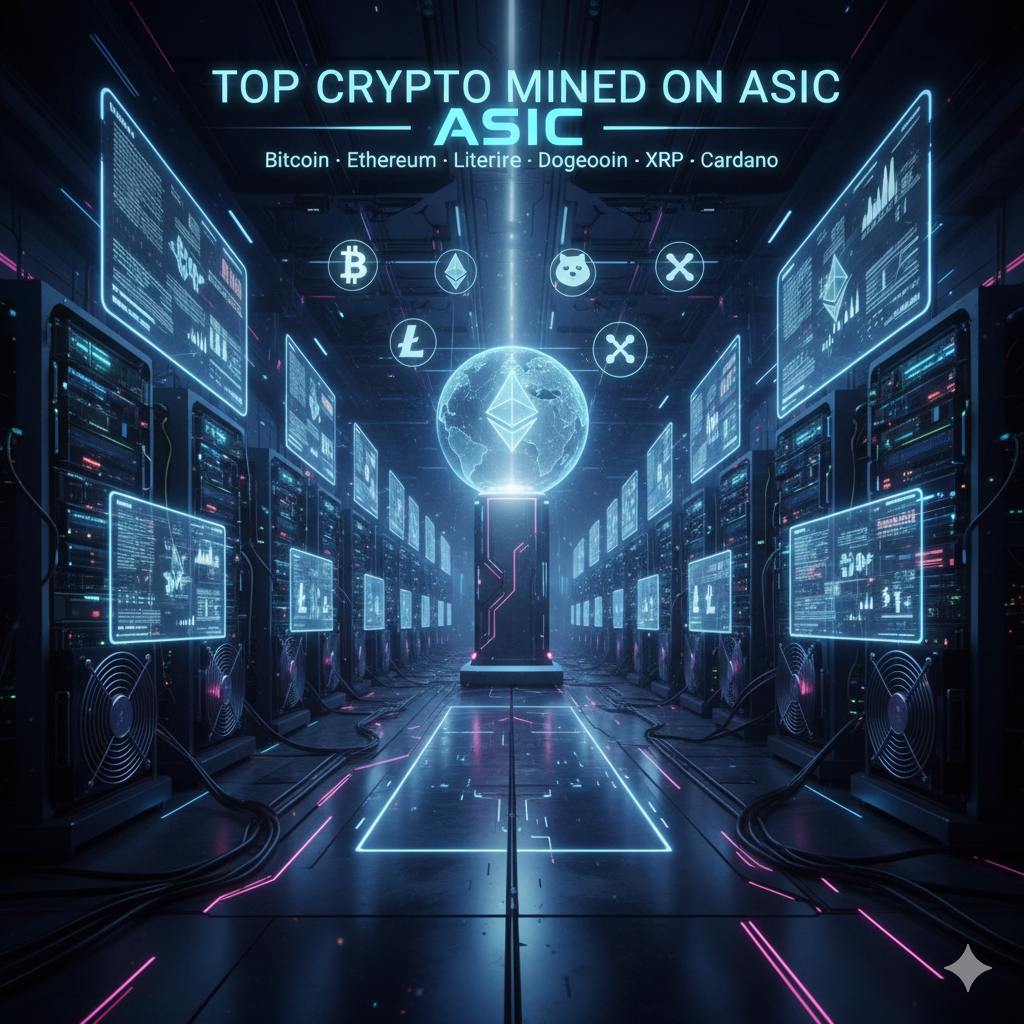
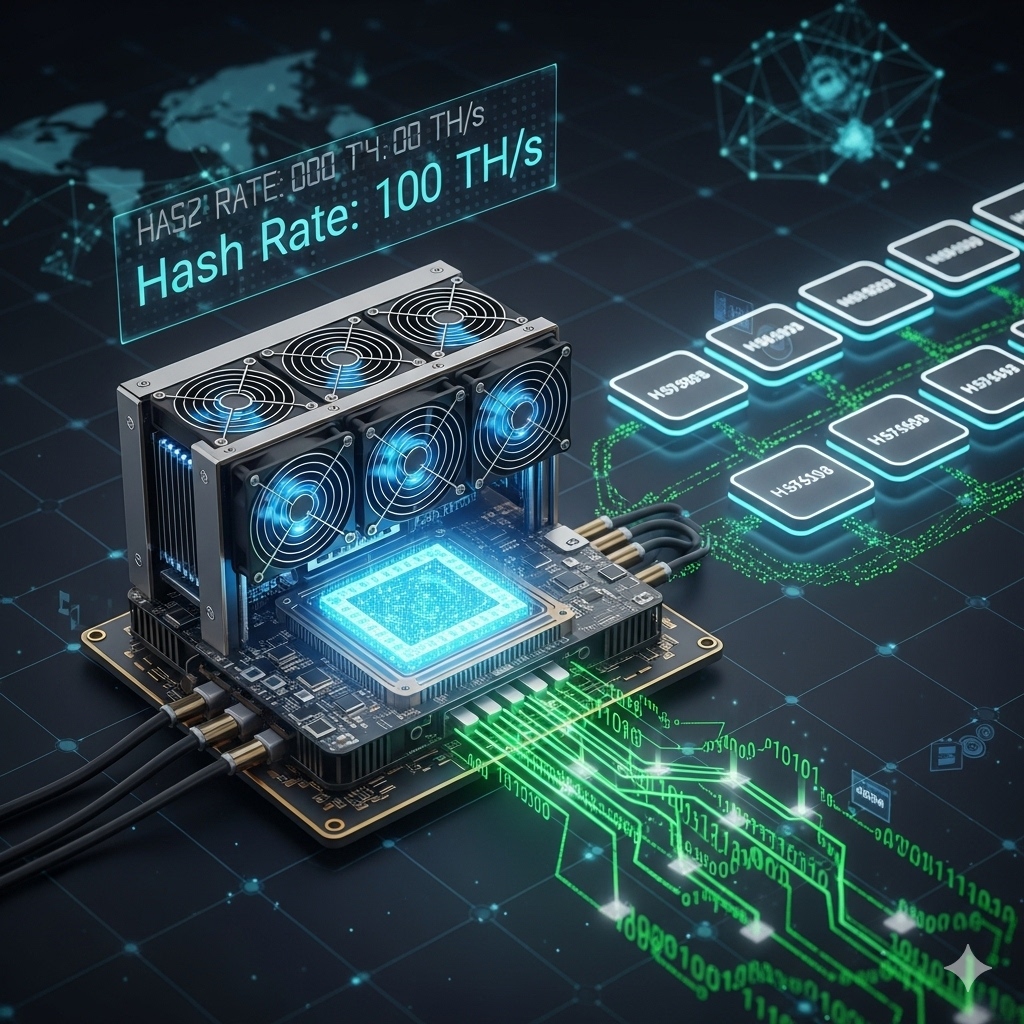
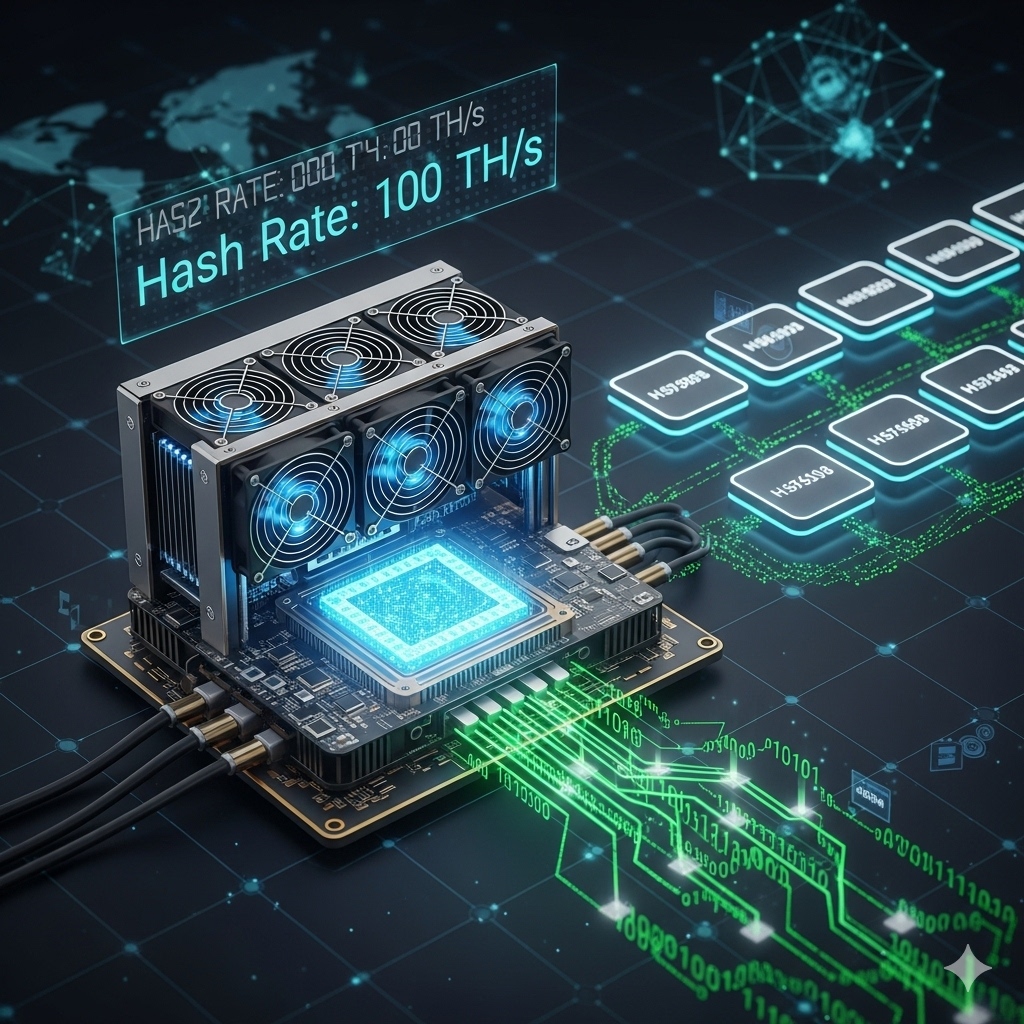 Whether you are planning to invest in Bitcoin or get into mining, a proper understanding of key terms is the foundation for success. We will explain what hash rate is, why halving is so important, and what the difference is between a coin and a token. Before you embark on your journey to find digital gold, you need to learn its language. Let's get started.